
Cleaning a CPAP hose comes down to a weekly routine: disconnect it from the machine and mask, rinse it with warm water and a drop of mild soap, swish or brush it if needed, rinse again until no soap remains, then hang it to air-dry completely before the next use. Skipping the drying step is where most problems start, since leftover moisture gives mold and bacteria exactly what they need to grow inside tubing you breathe through all night. A clean, fully dried hose protects both your CPAP equipment and the quality of air moving through your CPAP therapy.
Anyone managing sleep apnea knows the tubing takes a beating: humidifier moisture, skin oils from the mask end, and warm bedroom air all combine inside that hose every night. We've spent time testing cleaning accessories built specifically for CPAP equipment, and the routine below reflects what actually keeps tubing clear without damaging it. Always check your device manufacturer's instructions for anything specific to your machine, since compatibility and cleaning guidance can vary by model.
A Safe Manual Routine for CPAP Tubing
Manual cleaning with warm water and mild soap remains the safest, most widely recommended way to keep a CPAP hose free of residue and buildup. It costs almost nothing, takes a few minutes, and avoids the risks that come with harsher chemicals or specialty devices.
Disconnect the Hose From the Machine and Mask
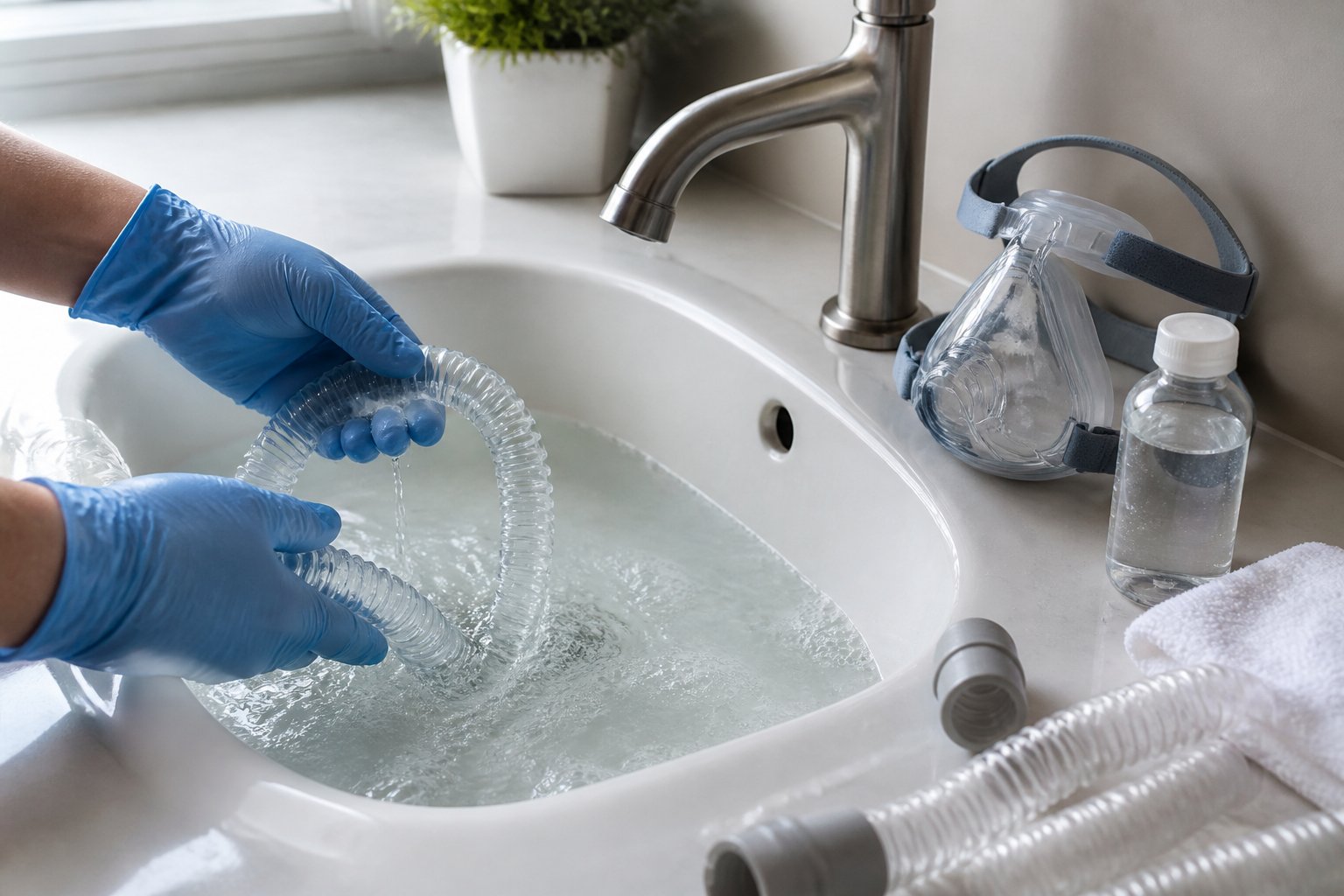
Start by detaching the hose from both the CPAP machine and the mask before cleaning it. This prevents water from reaching the motor or electrical components and lets you clean the tubing on its own, away from parts that shouldn't get wet.
Rinse and Wash With Manufacturer-Approved Supplies
Rinse the inside of the hose with warm water first to loosen any loose debris or condensation residue. Follow with a wash using warm water and a small amount of mild, unscented soap, gently working the solution through the length of the tubing. Some people prefer a diluted white vinegar solution (roughly one part vinegar to three parts water) as an occasional deeper clean, since vinegar helps break down mineral deposits from humidifier water. Rinse thoroughly afterward so no vinegar smell lingers.
Use a Long Brush Only When It Is Needed
A long, flexible cpap hose brush is useful when soap and water alone aren't reaching visible residue deep inside the tube, particularly in longer hoses or ones that haven't been cleaned in a while. LECRA's hose and mask cleaning brush kit is built for compatible 22 mm standard and 15 mm slim tubing, making it a practical option for reaching the full interior length. Skip the brush during routine weekly cleaning if a simple soap-and-water rinse already leaves the hose visibly clear.
Give the Tubing a Final Thorough Rinse
Finish with a complete rinse using clean, warm water to remove every trace of soap or vinegar. Any residue left behind can irritate the skin or affect airflow once the hose is back in use, so this step deserves as much attention as the wash itself.
How to Dry a CPAP Hose Completely
CPAP hose cleaning only works if the tubing dries fully before its next use, since trapped moisture creates the exact conditions mold and germs need to take hold. Drying takes longer than washing, and rushing it is the most common reason CPAP hoses develop odor or buildup.
Drain Water From Both Ends Before Hanging It
Hold the hose vertically and let gravity pull excess warm water out of both ends before hanging it up. Gently shaking or swinging it in a controlled motion helps clear water pooled in the ridges along the interior wall.
Air-Dry the Inside and Outside Before Reconnecting
Hang the hose in a spot with good airflow, away from direct sunlight, which can degrade the tubing material over time. A shower rod, towel bar, or dedicated hook works well; some people drape it over a hanger inside a closet with the door left open. Full drying typically takes several hours, and reconnecting it while still damp inside undoes the benefit of cleaning it in the first place.
What to Do If Water Remains in the Tube
Check for trapped water by holding the hose up to a light source and looking for droplets clinging to the inner wall. If moisture remains after hanging it overnight, drape it over two points to create a gentle U-shape that lets gravity pull remaining water toward the lowest section, then let it sit longer before reconnecting. A microfiber cloth wrapped loosely around the exterior can also help draw out residual dampness near the ends.
How Often Should You Clean Each CPAP Part?
CPAP tubing needs a wash about once a week, while the mask cushion that touches your skin directly benefits from daily attention. Filters follow a separate schedule based on dust exposure and manufacturer guidance rather than a fixed weekly rhythm.
Weekly Tubing Care and Daily Mask Cushion Care
Wipe the mask cushion daily with a damp cloth or a purpose-made wipe to remove oils and skin cells that accumulate overnight. The hose, frame, and headgear hold up well with a once-a-week wash using warm water and mild soap. LECRA's alcohol-free, fragrance-free, lint-free mask wipes are designed to be safe for silicone cushions, making daily upkeep quick without extra water or drying time.
Check the Filter for Dust and Follow Its Replacement Schedule
Inspect the filter regularly for visible dust or discoloration, since a clogged filter forces the machine to work harder and can affect air quality. Replacement schedules vary by device and filter type, so following manufacturer timing rather than guessing keeps airflow consistent. For guidance on replacement intervals and compatible options, the CPAP replacement filters guide covers when and how to swap filters for compatible ResMed devices.
Why Manufacturer Instructions Come Before General Advice
General cleaning advice works as a starting point, but manufacturer instructions account for specific materials and design details in a given mask or machine. Checking compatibility before using any accessory, including filters or humidification components, avoids mismatches that reduce performance or void a warranty.
Cleaning Shortcuts and Products to Avoid
Bleach, alcohol, and strong fragrances damage CPAP equipment and pose inhalation risks, making them unsuitable for hose or mask cleaning regardless of how effective they seem for household surfaces. The same caution applies to appliances and gadgets marketed as cleaning shortcuts.
Why Bleach, Alcohol, and Strong Fragrances Can Be Problematic
Bleach and alcohol break down the materials CPAP tubing and mask cushions are made from, leading to cracks, brittleness, and shortened equipment life. Scented soaps, essential oils, and citrus-based cleaners leave residue that can be inhaled once the machine is running again. Plain, mild, unscented soap remains the safer standard for both the mask cushion and the hose.
Why a Washing Machine and Dryer Are Not Appropriate
A washing machine or dryer applies far more heat, agitation, and force than CPAP tubing or mask components can tolerate. This kind of exposure warps tubing, damages headgear material, and often ends with equipment that needs full replacement rather than a simple clean. Hand-washing with mild soap and air-drying remains the appropriate method for every part of the system.
What to Know Before Using an Ozone Cleaner or UV Sanitizer
Ozone cleaners and UV sanitizers are marketed as convenient alternatives to manual washing, but manufacturer guidance on ozone devices warns that prolonged use may cause internal damage to a CPAP machine over time. Warranty coverage often excludes damage linked to ozone cleaning devices specifically. Checking your device manufacturer's stance on these tools before purchasing one helps avoid an expensive equipment replacement down the line.
Clean, Dry Tubing Supports a Reliable Nightly Routine
A CPAP hose that's washed weekly and dried completely each time supports consistent, comfortable CPAP therapy night after night. The routine itself is simple: disconnect, rinse, wash gently, rinse again, then let it dry fully before reconnecting.
Skipping the drying step undoes the value of every other part of the process, since trapped moisture is what allows mold and residue to build up inside tubing. Keeping mild soap, a hose brush for occasional deep cleans, and mask wipes for daily cushion care on hand makes the whole routine easier to maintain long-term. Well-maintained CPAP equipment tends to last longer and perform more reliably, which matters for anyone relying on it every single night.
Frequently Asked Questions
How often should I clean my CPAP hose?
A CPAP hose benefits from a wash about once a week using warm water and mild soap. The mask cushion needs daily wiping since it touches skin directly, while the hose can go longer between washes without issue.
How do I get water out of my CPAP hose after cleaning?
Hold the hose vertically right after rinsing and let gravity drain water from both ends before hanging it up. If moisture remains after an overnight dry, drape the tube into a gentle U-shape so residual water pools at the lowest point and continues draining.
Can I use vinegar to clean CPAP tubing?
A diluted white vinegar solution, roughly one part vinegar to three parts water, works well as an occasional deeper clean for mineral buildup from humidifier water. Rinse thoroughly afterward with clean water so no vinegar odor remains before the hose dries and goes back into use.
Are cleaning products safe for a silicone CPAP mask cushion?
Mild, unscented soap and water are safe for a silicone mask cushion, while bleach, alcohol, and antibacterial soaps can cause cracking and irritation over time. Purpose-made wipes designed to be alcohol-free and fragrance-free, like LECRA's mask wipes, offer a quicker daily option that's still gentle on silicone.
When should I replace my CPAP hose?
Most CPAP hoses need replacing roughly every three months, or sooner if you notice cracks, discoloration, a persistent odor after washing, or visible wear. A hose that no longer holds its shape or shows pinholes should be swapped out even if the three-month mark hasn't arrived yet.
0 commentaire