
A clean mask cushion each morning starts with the right wipe the night before. If your face feels oily or tight where the cushion sits, or you notice a faint odor building up between washes, an alcohol-free wipe designed for CPAP masks solves both problems without drying out silicone or irritating skin.
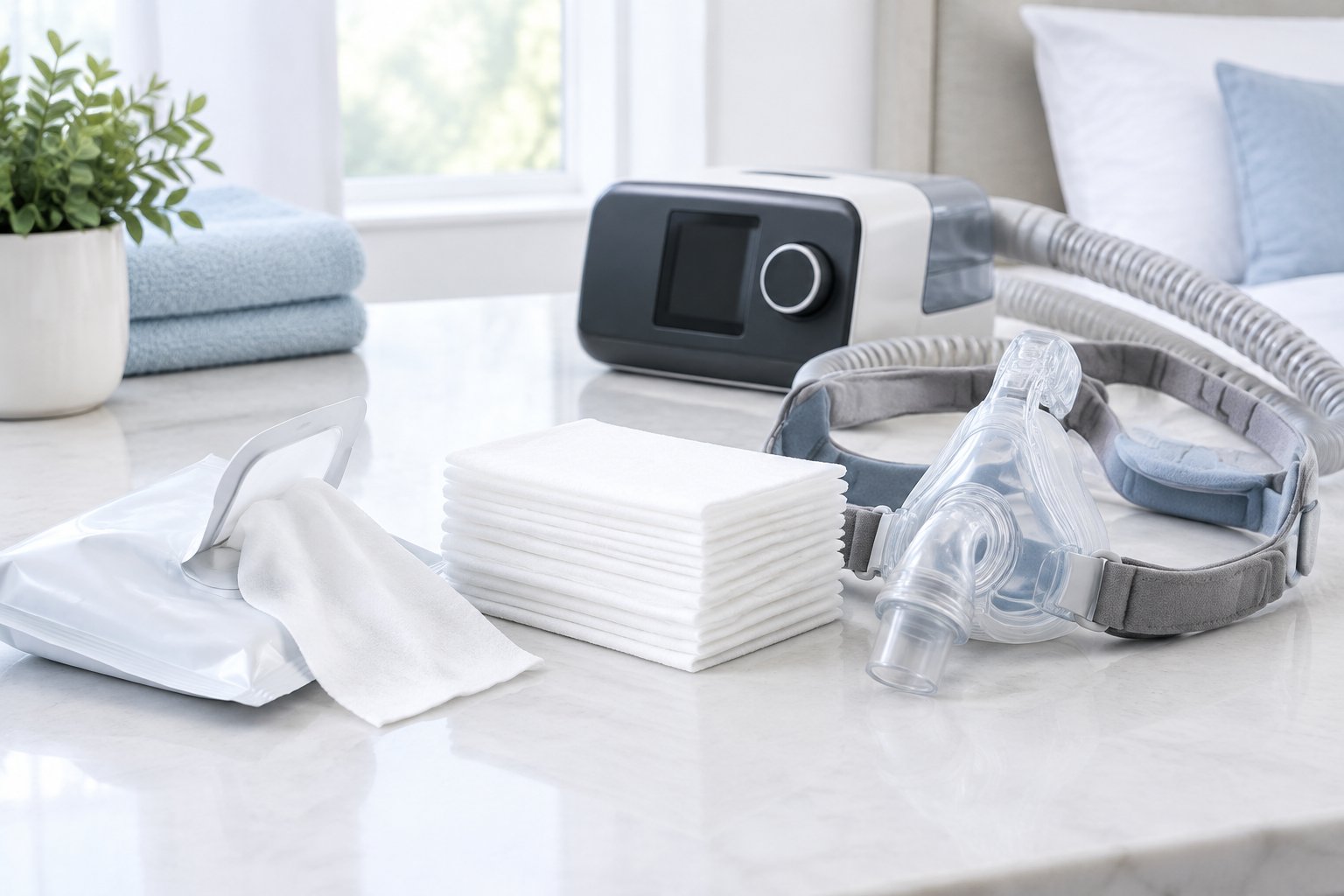
For most Canadian CPAP users, alcohol-free, unscented wipes made specifically for masks are the safest daily option, because they remove facial oils and residue without the drying or cracking that alcohol-based products can cause on silicone. These wipes are meant to sit alongside your regular cleaning routine, not replace it. LECRA makes alcohol-free, fragrance-free, lint-free mask wipes designed to be safe for silicone, with free standard shipping across Canada and a support team ready to help with product or compatibility questions.
CPAP therapy only works well when the mask forms a good seal against your skin. Facial oils, sweat, and skin cells build up on the cushion every night, and how you clean that surface affects both comfort and how long the mask lasts.
Why Alcohol-Free Formulas Matter for CPAP Care
Alcohol dries out silicone over time, causing it to harden, crack, or lose its shape. That damages the seal your mask depends on, which can lead to air leaks and a less effective night of sleep apnea therapy. Alcohol-free wipes clean the same surface gently, without that risk.
How Daily Facial Oils and Moisture Affect a Mask Cushion
Your skin produces oils and sheds cells all night, and a CPAP mask sits directly against that surface for hours. This buildup leaves a thin film on the cushion that can affect the seal and eventually cause a slippery or discolored surface. Wiping the cushion daily removes this residue before it has a chance to affect fit or comfort.
Why Fragrance and Alcohol Can Be Concerns for Sensitive Skin
Fragrance and alcohol are two of the most common triggers for skin irritation around the nose and mouth. Since a CPAP mask sits against sensitive facial skin for hours each night, even mild irritants can cause redness or discomfort over time. Unscented, alcohol-free wipes lower that risk while still cleaning effectively.
How to Build a Practical CPAP Cleaning Routine
A dependable CPAP cleaning routine uses daily wipes for the mask cushion and a deeper wash on a set schedule for tubing, headgear, and the water chamber. Wipes handle the fast, everyday task; soap-and-water cleaning handles the parts that need a more thorough rinse.
A Quick Daily Wipe-Down for the Mask and Cushion
Wipe the cushion each morning after you take the mask off, while residue is still fresh and easy to remove. One pass with an alcohol-free wipe usually clears facial oils without needing to scrub. Let the cushion air dry fully before using the mask again that night, since trapping moisture underneath a headgear strap can encourage buildup elsewhere.
When Wipes Are Not Enough for CPAP Equipment
Wipes are built for quick surface care, not for tubing, humidifier chambers, or a full deep clean. Hoses need a weekly wash with mild soap and water, and the water chamber needs a daily rinse plus a weekly soak to prevent mineral or bacterial buildup. For a full weekly routine, our guide on CPAP machine maintenance walks through each component, and our CPAP hose cleaning steps cover safe washing and drying for tubing specifically.
How to Clean Without Compromising Manufacturer Instructions
Check your device manufacturer's cleaning guidance before adding any new product to your routine. Manufacturers specify which materials and cleaning methods are safe for their masks and machines, and those instructions should always take priority over general advice. If you're unsure which filters or accessories fit your machine, our guide on how to choose CPAP filters can help confirm compatibility before you buy.
What to Look for in Gentle Mask Cleaning Wipes
The best CPAP wipes are unscented, alcohol-free, and made from a lint-free, soft material that won't leave fibers on the mask surface. Beyond the formula, packaging and wipe size affect how easy the wipes are to use every day.
Unscented, Lint-Free Materials and Comfortable Daily Use
An unscented, lint-free wipe cleans without adding fragrance chemicals near your airway or leaving fabric particles on the cushion. Cotton wipes are a common choice because they're soft against skin and absorb oil well without needing extra pressure or rubbing. LECRA's premium CPAP mask cleaning wipes are built around this exact combination: alcohol-free, fragrance-free, and lint-free.
Natural Ingredients and Aloe Vera Extract: What They Do and Do Not Mean
Aloe vera extract is added to some wipes for a soothing feel on skin, but it's a comfort ingredient, not a disinfectant. A wipe labeled with natural ingredients still needs to be checked for alcohol content and fragrance, since "natural" doesn't automatically mean gentle or unscented. Read the label rather than relying on marketing terms alone.
Canisters, Flat Packs, and Individually Wrapped Travel Wipes
Canisters work well for a bedside routine where wipes stay in one place. Flat packs and individually wrapped wipes suit travel or a bag you carry to work, since they take up less space and stay sealed until you need one. Choose the format that matches where you actually clean your mask, whether that's a nightstand or a suitcase.
Which Wipes Should Stay Away From Your Mask?
Household disinfecting wipes like Lysol and Clorox, along with alcohol prep pads, are not safe for CPAP masks. These products are formulated for hard, non-porous surfaces and contain alcohol or other chemicals that can degrade silicone and irritate skin with repeated contact.
Why Lysol Wipes, Clorox Wipes, and Alcohol Wipes Are Not Interchangeable
Lysol and Clorox wipes are built to kill germs on kitchen counters and gym equipment, not to sit against your face every night. Their alcohol and disinfectant chemicals can dry out and crack mask silicone over time, weakening the seal your therapy depends on. Alcohol prep pads carry the same risk, even in small amounts.
Scented vs. Unscented CPAP Wipes for Personal Comfort
Some CPAP wipe brands offer scented options like citrus, grapefruit, or lavender alongside unscented versions. Scent comes down to personal preference, but anyone with sensitive skin or a history of irritation is better served by an unscented formula. Since the wipe sits close to your nose and mouth, even mild fragrances can feel stronger than they would elsewhere.
How Popular CPAP Wipe Options Differ in Formula and Packaging
Several established CPAP wipe brands share a similar alcohol-free, unscented approach but differ in ingredients and format.
| Brand | Formula | Notable Feature |
|---|---|---|
| Citrus II | Alcohol- and solvent-free, derived from citrus, coconut, corn | Deodorizes without harsh fragrance |
| Snugell | Alcohol-free, unscented, aloe vera | 100% soft cotton |
| Jayour Travel Wipes | Alcohol-free | Individually wrapped for travel |
| LECRA | Alcohol-free, fragrance-free | Lint-free, silicone-safe |
Making Daily Mask Care Easier With LECRA
LECRA's approach to CPAP mask wipes is built around three qualities Canadian CPAP users ask for most: alcohol-free, fragrance-free, and lint-free. This combination is designed to fit into a daily CPAP cleaning routine without adding steps or guesswork, and it's made to be gentle on both skin and silicone mask materials.
Beyond the wipes themselves, LECRA supports the rest of a CPAP hygiene routine with hose cleaning brush kits and replacement filters for compatible ResMed devices, so equipment care doesn't require piecing together products from multiple sources. Orders ship free anywhere in Canada with no minimum purchase, and the support team responds to compatibility or product questions within 1 to 2 business days. For a broader look at building consistent habits around equipment care, the guide on medical CPAP accessories and care tips rounds out what a full routine can include.
Frequently Asked Questions
Are alcohol-free CPAP wipes safe for silicone mask cushions?
Yes, alcohol-free wipes are formulated to avoid the drying and cracking that alcohol causes on silicone. Look for a label that confirms the wipe is alcohol-free and intended for CPAP mask materials specifically, since general household wipes are not built with silicone in mind.
Can I use alcohol-free CPAP wipes every day?
Yes, alcohol-free CPAP wipes are designed for daily use on the mask cushion. Wiping the cushion each morning helps remove facial oils before they build up, and most brands recommend this as part of a regular routine alongside weekly washing of other components.
Do CPAP wipes replace washing my mask with soap and water?
No, wipes handle quick daily surface cleaning, while a full wash with mild soap and water removes buildup more thoroughly. Most manufacturers recommend washing the cushion, headgear, and frame on a weekly basis even if you wipe daily.
Can I use baby wipes, Lysol wipes, or Clorox wipes on my CPAP mask?
Lysol and Clorox wipes contain alcohol and disinfectant chemicals that can damage silicone and are not made for skin contact each night. Baby wipes are gentler but often contain lotions or fragrances not meant to be breathed in through a mask, so a wipe made specifically for CPAP masks is the safer choice.
Are unscented CPAP wipes better for sensitive skin?
Unscented wipes reduce the chance of irritation for people with sensitive skin, since fragrance is a common trigger for redness or discomfort. Because the mask sits close to the nose and mouth for hours, an unscented, alcohol-free formula is worth prioritizing if you've had skin reactions before.
Do I need to rinse my mask after using CPAP cleaning wipes?
Most CPAP wipes are designed to be used without rinsing and leave no residue behind. Check the product instructions for your specific wipe, since formulas can vary slightly between brands.
0 commentaire